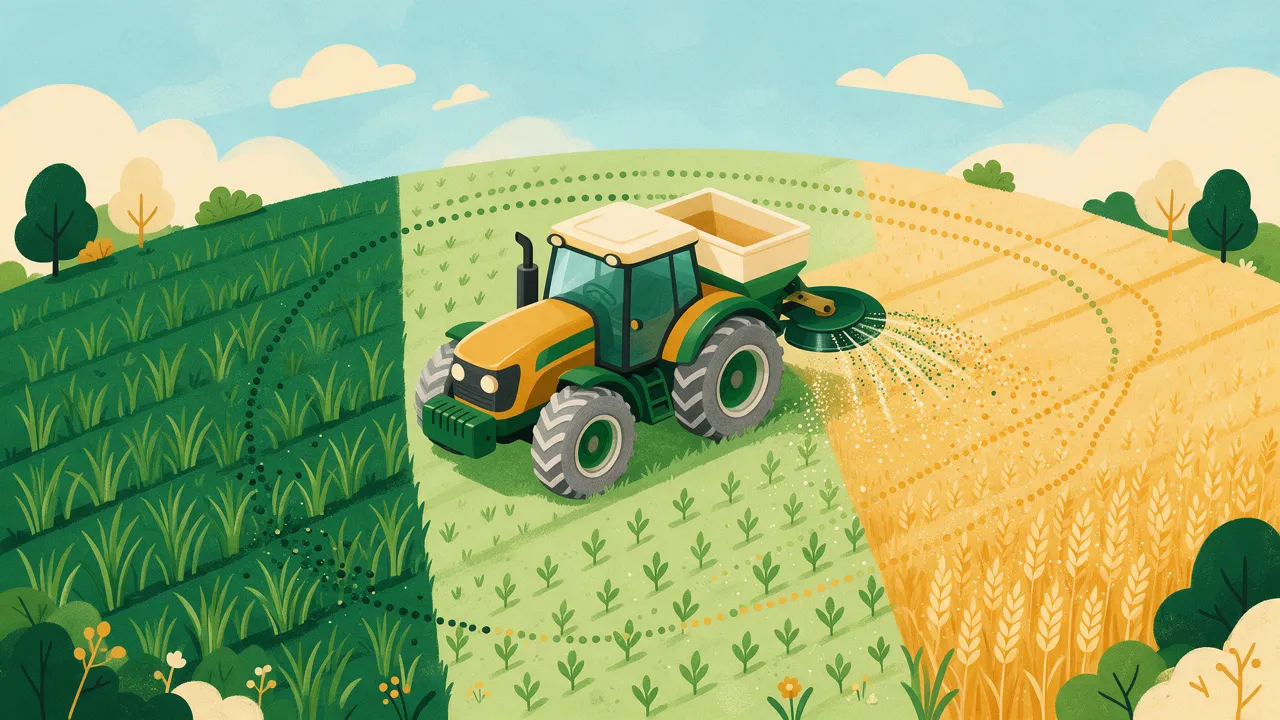
Variable rate application rests on a simple idea: fields are not uniform, so fertilisation should not be either. The honest question is when it actually pays off.
When it pays
The benefit grows with field variability and input price. On uniform fields it returns a percent or two; on fields with distinct zones the yield-potential differences often reach 30–50%, and redistributing the same fertiliser quantity has a real effect at zero extra cost — if your machinery can already read prescription maps (much of the equipment sold in the last decade can).
Where to get the zones
The cheapest entry today is satellite-based soil zoning with 2–3 lab samples for calibration. Start with one field, keep a constant-rate control strip, stay within ±15–20% of your usual rate in year one, and record everything. In Zemedelko the VRA file comes out of the soil analysis ready for the terminal.